







One minute, you’re moving through the life you expected.
The next, something changes.
A diagnosis.
A loss.
A relationship ending.
A career shifting beneath your feet.
A phone call that divides your life into before and after.
Suddenly, the plan you trusted is no longer available.
People will tell you to be strong.
To stay positive.
Look for the lesson.
Keep moving forward.
And I’m sure they mean well.
But resilience is rarely as polished as we make it sound.
It almost never looks like a triumphant comeback or an inspiring speech delivered after everything has been neatly resolved.

Sometimes resilience in midlife looks like crying in the car and still walking into the meeting.
Sometimes it looks like admitting you don’t know what comes next.
Sometimes it looks like cancelling the plans, asking for help, or allowing yourself to grieve the life you thought you would have.
And sometimes, it looks like making one small decision that says:
This is not how my story ends.
Resilience Is Not Pretending You’re Fine
Many women have been praised their entire lives for staying put together.
We keep the family functioning.
Meet the deadline.
Return the phone call.
Remember the birthday.
Carry what needs carrying.
Even when — especially when — we’re quietly falling apart.
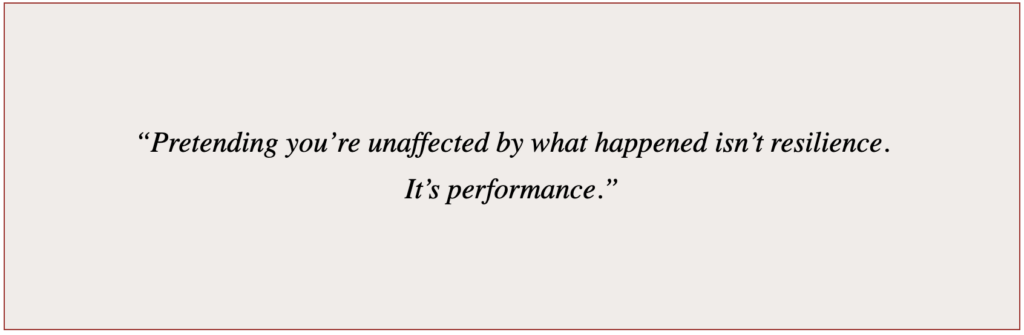
But pretending you’re unaffected by what happened is not resilience.
It’s performance.
Real strength begins when you tell the truth.
This hurt.
This scared me.
This changed me.
I can’t keep doing everything the way I did before.
There is no prize for suffering beautifully.
And there is nothing weak about acknowledging that life has knocked the wind out of you.
Sometimes the most resilient thing you can do is stop insisting you’re fine long enough to understand what you actually need.
Resilience Makes Room for Grief
When life doesn’t go according to plan, we don’t only grieve what happened.
We grieve what was supposed to happen.
The future we pictured.
The identity we trusted.
The relationship we believed would last.
The body we assumed would always carry us.
The version of ourselves who existed before everything changed.

That grief deserves room.
You cannot rush it because other people are uncomfortable with your sadness.
You cannot gratitude-journal your way around it.
And you do not have to immediately turn your hardest experience into a beautiful lesson.
Some chapters are painful before we can see how they’re meaningful.
Resilience allows that truth to exist.
It gives you permission to mourn what was lost without deciding that you are lost, too.
Resilience Is Doing the Next Honest Thing
After my heart attack at 45, I didn’t wake up with a perfectly formed vision for my next chapter.
I woke up knowing I had survived — and knowing that I couldn’t return to my life unchanged.
There was no grand plan waiting beside the hospital bed.
Only questions.
What matters now?
What am I no longer willing to postpone?
If I’ve been given more time, how do I want to spend it?
The answers didn’t arrive all at once.
They revealed themselves through small, honest choices.
That’s often what resilience looks like.
Not knowing how to rebuild your entire life, but knowing the next true thing.
Make the appointment.
Have the conversation.
Say no this time.
Try the idea.
Rest today.
Walk into the room.
When the whole path feels impossible, look for the next honest step.
Then take it.
Resilience Lets Other People In
We’ve romanticized the woman who handles everything alone.
She’s capable.
Dependable.
Unshakeable.
And exhausted.
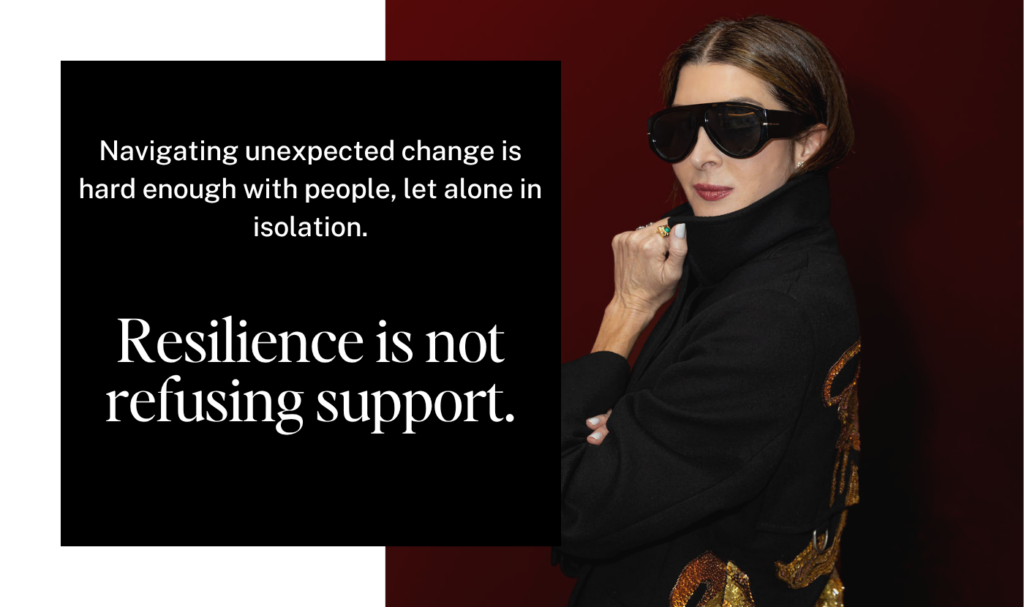
There are seasons when strength doesn’t mean carrying more.
It means finally allowing someone else to help carry the load.
I know, asking for help can feel vulnerable. Particularly when you’re used to being the one everyone relies on.
Ask anyway.
Let someone bring dinner.
Sit beside you at the appointment.
Listen without fixing.
Remind you who you are when you temporarily forget.
Resilience Is Not Always “Bouncing Back”
To me, the phrase “bounce back” suggests that the goal after a life-altering experience is to return to exactly who you were before it happened.
But what if you aren’t supposed to go back?
What if the interruption revealed something the old plan could no longer hide?
That you were exhausted.
That the work no longer fit.
That the relationship wasn’t good for either of you.
That you had been saving your real life for someday.
Rebuilding after a setback doesn’t have to mean recreating what existed before.
It’s deciding what’s still worthy of coming with you.
Resilience Knows When to Rest
We tend to recognize resilience when it’s moving.
Working.
Building.
Solving.
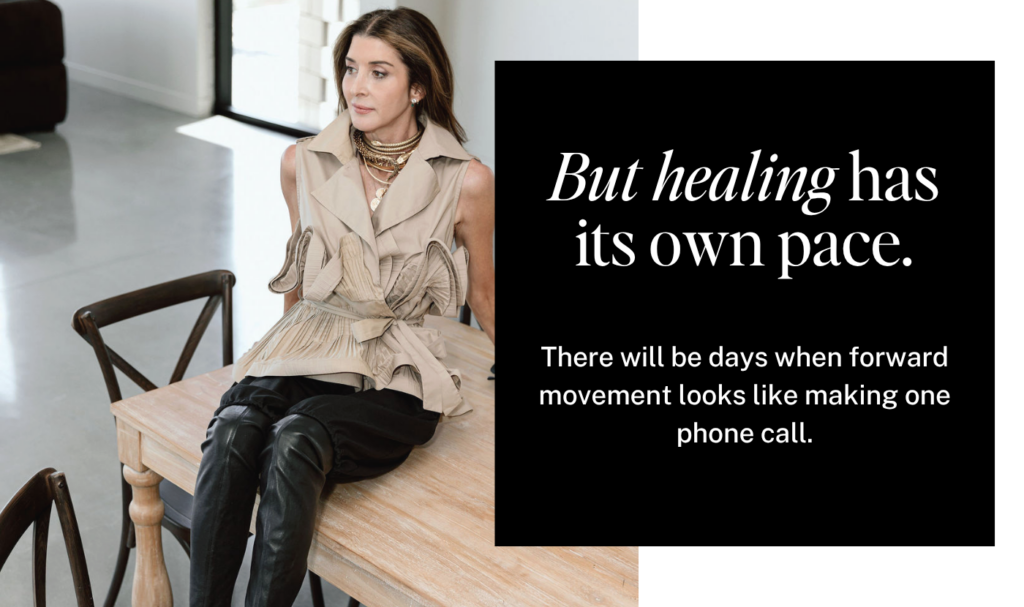
Days when it looks like changing your mind.
Days when the bravest thing you do is close the door, turn off the noise, and let your body recover from what you’ve been carrying.
Rest is not a lack of resilience.
It is part of it.
You are not falling behind because you need time to catch your breath.
You’re learning how to move forward without abandoning yourself in the process.
That may not look impressive from the outside.
It may, however, be the very thing that makes your next chapter sustainable.
Resilience Is Choosing What Happens Next
No, we don’t get to choose every chapter.
I certainly wouldn’t have chosen a heart attack.
You may not have chosen the loss, the diagnosis, the betrayal, the ending, or the unexpected turn that brought you here.
But there comes a moment when the question begins to change.
It’s no longer only:
Why did this happen to me?
It becomes:
What will I do with what happened?
That question does not erase the pain.
It returns some of the power.
You get to decide what this season clarifies.
What it asks you to release.
What it makes impossible to ignore.
What it teaches you about time, truth, and the life you still want to live.
You are not defined by what happened to you.
You are defined by what you choose to do next.
You Do Not Have to Make the Hard Chapter Look Beautiful
Resilience isn’t a personality trait reserved for women who never fall apart.
It’s a series of choices made in the middle of uncertainty.
The choice to tell the truth.
To accept support.
To rest.
To begin again.
To believe that a changed plan can still become a meaningful life.
Maybe even a more honest one.
There may be nothing glamorous about the middle of it.
You may not feel brave while you are living it.
But every time you choose not to abandon yourself, you are practicing resilience.
Every time you let the experience change you without allowing it to define you, you are rebuilding.
And every time you take one honest step toward the life that’s still waiting for you, you are proving that the unexpected chapter does not get the final word.
If you’re still learning midlife resilience, come join The UNproper Community. I’d love to support you in your wildly beautiful, messy, and unfinished story.
And if you value in-person connection as much as we do, join The UNproper Club Guest List.
This is how we overcome together.
xo, 💋
Catherine






Read the Comments +